
Balayage vs Highlights: What's the Difference — And Which Is Right for You?
If you're thinking about going lighter, you've probably come across the words balayage, highlights, babylights and maybe a few other terms that sound like they require their own hairdressing dictionary.
So what's the actual difference?
Balayage and highlights can both create beautiful lighter, dimensional hair, but they use different techniques and can produce quite different results. One isn't necessarily "better" than the other. It comes down to the look you're after, your natural hair colour, your previous colour history and how much maintenance you're happy with.
Here's what you need to know before you book.
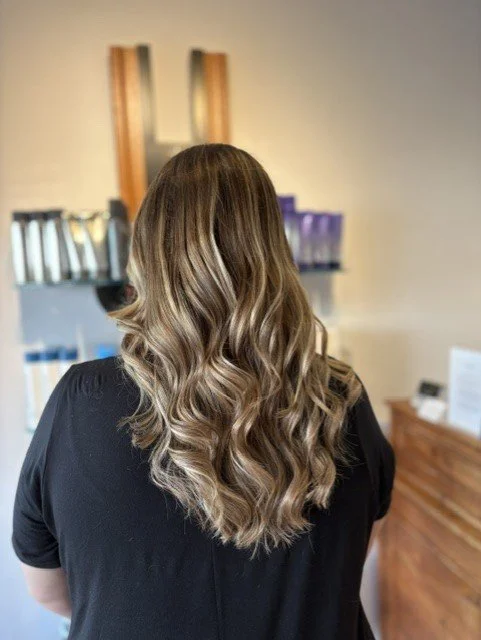
Beautiful ‘bronde’ balayage on a client in Wick Salon.
What is balayage?
Balayage is a highlighting technique where lighter colour is strategically painted onto sections of the hair to create a softer, more blended result.
The word comes from the French balayer, meaning "to sweep", which refers to the sweeping motion used when applying the colour.
Unlike traditional highlights, balayage doesn't necessarily start right at the root. The lighter pieces can be placed further down the hair, blended through the mid-lengths and concentrated towards the ends.
The result is usually a more graduated, natural-looking effect rather than an obvious line between your natural colour and the lighter sections.
That doesn't mean balayage has to look subtle, though.
A good balayage can be anything from barely-there honey and caramel pieces to much brighter blonde, depending on the starting colour and the look you're trying to achieve.
The important thing is where the lightness is placed.
What are traditional highlights?
Traditional highlights are generally created using foils.
Sections of hair are separated and lightener or colour is applied before the hair is wrapped in foil. This allows the stylist to create precise, consistent sections of lighter hair.
Highlights can be taken much closer to the root than balayage and can create a more uniform overall lightening effect.
They're particularly useful if you want to:
Make your overall hair colour noticeably lighter
Create lots of blonde throughout the hair
Blend grey hair
Create a more uniform result
Add brightness from root to tip
Gradually transition from darker hair to lighter hair
Highlights can also be incredibly natural-looking. They're not automatically chunky or stripey — modern highlighting techniques allow stylists to create very fine, blended pieces.
So the old idea that highlights = obvious blonde stripes is very much outdated.
Balayage vs highlights: what's the difference?
The simplest way to think about it is this:
Balayage is about creating strategically placed, blended lightness.
Highlights are about creating more precise sections of lighter hair, often from closer to the root.
But there's considerably more to it than that.
BalayageHighlightsTechniqueColour is painted onto selected sectionsHair is sectioned and placed in foilsRootOften softer and more diffusedCan be taken right up to the rootOverall effectBlended, dimensional, graduatedBrighter, more consistent lightnessGrow-outUsually softerCan be more noticeableMaintenanceOften lower maintenanceUsually requires more regular root appointmentsBest forNatural-looking dimension and a softer grow-outOverall brightness and root-to-tip lightness
There are plenty of exceptions, which is why a consultation matters.
Your stylist isn't simply choosing between two boxes labelled "balayage" and "highlights". They're choosing a technique — or sometimes a combination of techniques — to create the result you want.
Which is lower maintenance: balayage or highlights?
This is one of the biggest reasons people search for balayage vs highlights in the first place.
Generally, balayage can be lower maintenance because the colour can be placed away from the root, meaning there's less of an obvious regrowth line as your natural hair grows.
That doesn't mean you can have balayage once and forget about your hair for a year.
Lighter hair still needs looking after. Toning may be needed to refresh the colour, and your stylist may recommend a gloss, treatment or refresh between larger balayage appointments.
But if you don't want to be in the salon every few weeks having your roots touched up, a softer balayage can be a very good option.
What about highlights?
Because traditional highlights can be taken much closer to the root, regrowth can become visible sooner.
For some people, that's exactly what they want.
If your priority is bright blonde from root to tip, highlights can give you a more consistent result than balayage.
It's less about which technique is "lower maintenance" in absolute terms and more about what kind of maintenance you're comfortable with.
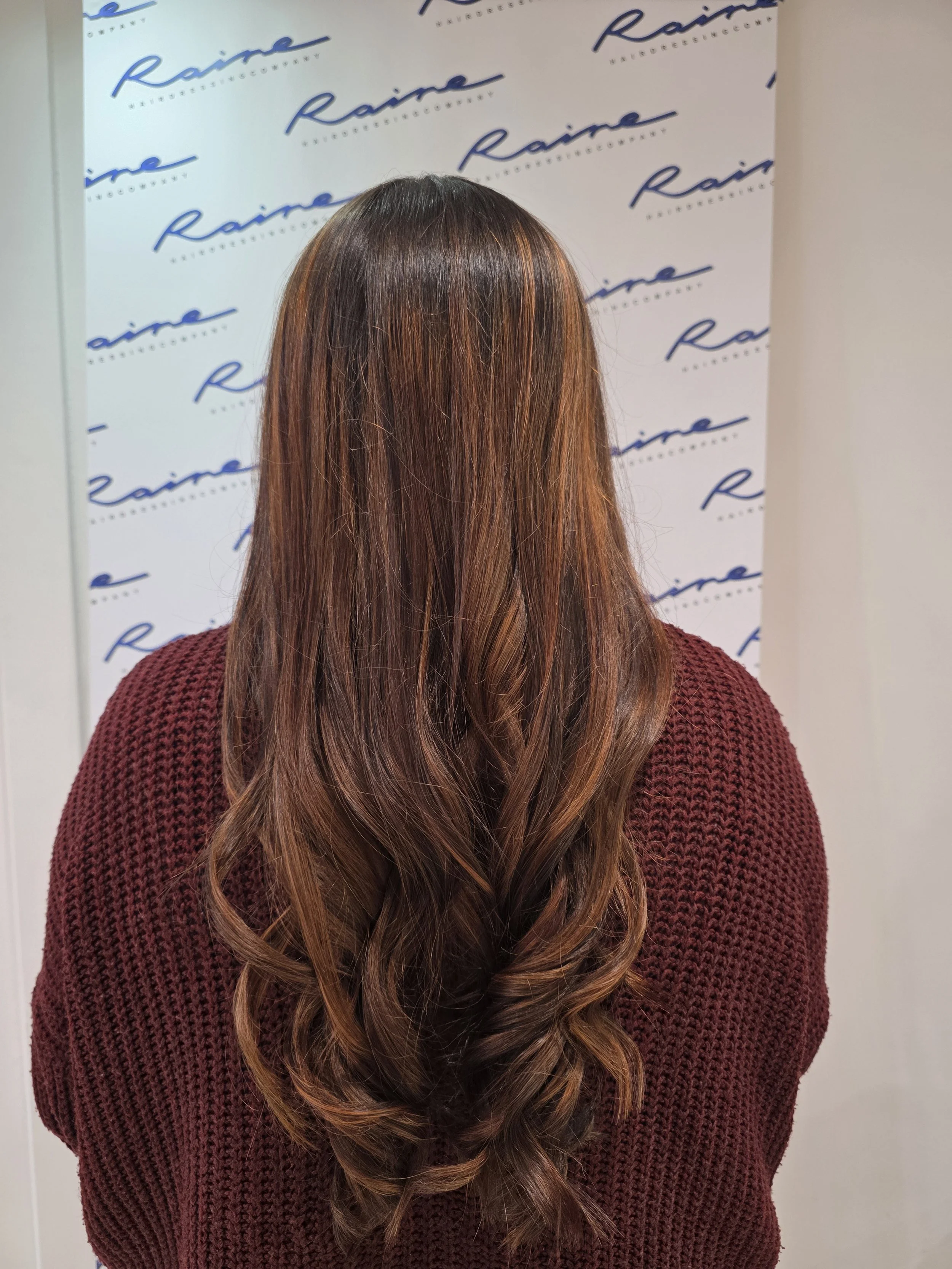
A soft balayage on brunette hair, adding warmth and dimension.
Is balayage better for dark hair?
Balayage can work beautifully on brunette and darker hair, particularly if you want to add warmth and dimension without completely changing your base colour.
Think:
Chocolate brown with caramel
Rich brunette with honey
Dark brown with warm beige
Soft espresso with lighter brown pieces
However, there's an important distinction between adding dimension to dark hair and turning dark hair blonde.
If you're starting with very dark hair and want to become significantly lighter, that may require multiple appointments.
Hair can only be lifted so far in one session while keeping its condition in mind.
Your existing colour history matters too.
Virgin dark hair and hair that has previously been coloured dark, boxed dyed or subjected to multiple colour treatments are very different starting points.
This is one of the reasons your stylist may recommend a gradual plan rather than trying to achieve your Pinterest picture in one appointment.
Is balayage better for blonde hair?
Balayage can work particularly well if you're already blonde and want to create more depth and dimension.
For example, adding slightly darker pieces alongside lighter sections can make blonde hair look fuller and more interesting.
Alternatively, if you're a darker blonde looking to brighten your hair, carefully placed balayage can create a sun-kissed effect without making the entire head uniformly lighter.
But again, there isn't one technique that's automatically right for every blonde.
The placement of the colour makes a huge difference.
What about babylights?
You've probably heard this term too.
Babylights are very fine, delicate highlights designed to mimic the lighter pieces you naturally get as a child or after spending time in the sun.
They're much finer than traditional highlights and can be used to create an extremely soft result.
Babylights can be used on their own, but they're also often combined with balayage.
For example, a stylist might use balayage through the lengths while adding finer pieces around the face or near the root to create a brighter, more seamless finish.
This is why looking at a picture and saying "I want balayage" doesn't necessarily tell your stylist everything they need to know.
You might actually want balayage + babylights + face-framing pieces to achieve the particular result you're showing them.
And that's where the consultation comes in.
Balayage vs highlights: which lasts longer?
There's no single answer because several things affect how long your colour looks fresh.
Your natural hair colour, how quickly your hair grows, how light you've gone, how often you wash your hair, your products and whether you need toning between appointments can all make a difference.
However, balayage often has a softer grow-out because the lighter colour isn't necessarily placed directly against the scalp.
Highlights can require more regular maintenance if you're looking for a consistently bright root-to-tip result.
A good colour appointment should therefore consider not just how your hair looks when you leave the salon, but how you want it to look six, eight or twelve weeks later.
That's particularly important if you're looking for a lower-maintenance colour.
What if I want really blonde hair?
This is where things get interesting.
If your goal is a very bright, all-over blonde, traditional highlights may be more appropriate than balayage.
Why?
Because balayage intentionally leaves areas of your natural colour between the lighter pieces. If you want almost every strand to look significantly lighter, you need a technique that can achieve much more overall coverage.
That doesn't mean balayage can't be bright.
It absolutely can.
But if you show your stylist a photo of an almost-white blonde and ask for "balayage", the technique required may be considerably more involved than you realise.
You may need a combination of techniques, multiple appointments or a different colour approach altogether.
This is also where hair condition becomes important.
Going significantly lighter involves chemical processing. Your stylist needs to balance the result you're looking for with the condition and history of your hair.
What if I want to blend grey hair?
Highlights can be particularly useful for grey blending because fine lighter pieces can be distributed throughout the hair, helping to soften the contrast between natural grey and your existing colour.
Balayage can also play a role, depending on your natural colour and the amount and pattern of grey.
The goal isn't necessarily to "cover" every grey hair.
For some clients, the aim is to make the transition between their natural grey and coloured hair feel softer and more intentional.
That can mean using several tones rather than simply choosing one colour and applying it everywhere.
If you're beginning to go grey, it's worth discussing your long-term plan with your stylist rather than treating each appointment as a completely separate colour decision.
How do I know which one is right for me?
This is the bit where we could give you a checklist and say:
Choose balayage if...
Choose highlights if...
But hair doesn't really work that neatly.
Your stylist will consider things such as:
Your natural colour
Someone with naturally dark brown hair has a different starting point from someone with naturally light blonde hair.
Your previous colour
This is a big one.
Previously coloured hair behaves differently from virgin hair, and old colour can affect what is possible.
If you've used box dye, permanent dark colour, henna or had previous lightening services, tell your stylist.
Even if it was years ago.
Your desired result
"Brighter" can mean very different things to different people.
Do you want subtle dimension? A noticeable blonde transformation? A sun-kissed effect? A bright face frame? An overall lighter appearance?
The more specific you can be about the result, rather than simply naming a technique, the better.
How much maintenance you want
Would you happily return to the salon every six weeks for a bright root?
Or would you rather have something that can grow out softly?
There's no right answer. It's about what fits your life.
Your hair's condition
If your hair is already fragile or heavily processed, your stylist may recommend a more gradual approach.
Sometimes the right colour plan isn't about getting to the final result as quickly as possible.
It's about getting there while keeping your hair in good condition.
Why your balayage or highlights might not look exactly like your inspiration photo
This is worth knowing before your appointment.
You can bring your stylist the exact same picture as someone else and still get a different result.
That's because the starting point matters.
The colour in the photograph may have been created on completely different hair. It might have been photographed in natural sunlight, edited, toned differently or built over several appointments.
Your hair might have:
A different natural base
Previous permanent colour
Previous bleach
Different porosity
A different texture
Different levels of existing damage
A good stylist will use your inspiration photo to understand what you like about the colour, rather than promising to reproduce it pixel for pixel.
Maybe it's the brightness around the face.
Maybe it's the caramel tones.
Maybe it's the contrast.
Maybe it's simply that you like how soft the overall colour looks.
Those details are much more useful than the word "balayage" on its own.
Can you have balayage and highlights together?
Absolutely.
In fact, combining techniques can sometimes create the most natural and dimensional result.
Your stylist might use traditional foils to create brightness closer to the root, balayage through the lengths, finer babylights in selected areas and a toner or gloss to bring everything together.
There isn't a rule saying you have to choose one technique and stick to it.
The best colour is the one that creates the result you want and works with your hair.
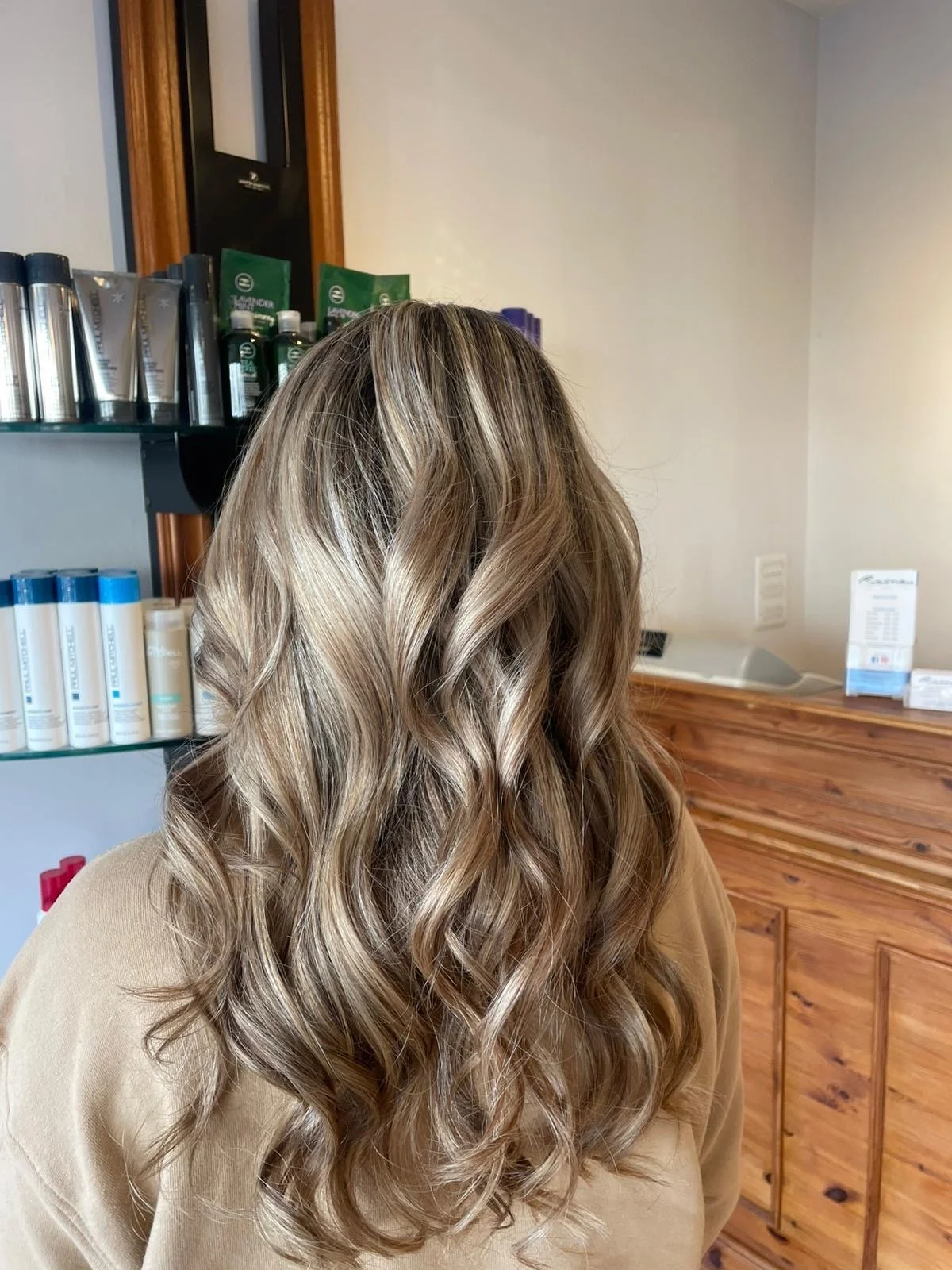
Balayage in beautiful natural shades, emphasised with a loose curl.
So... balayage or highlights?
Neither technique is universally better.
Balayage tends to suit people looking for softer, blended dimension and a more gradual grow-out.
Highlights can be ideal if you want brighter, more consistent lightness, particularly closer to the root.
And for many clients, the answer is actually a combination of techniques.
The most important thing is to start with the look you want, rather than assuming you need a particular technique because you've seen it on Instagram.
Bring your inspiration pictures. Tell your stylist what you love about them. Be honest about your colour history. And talk about how much maintenance you're realistically prepared to do.
From there, your stylist can work out the best way to get you there.
Balayage and highlights at Raire Hairdressing Company
Looking for balayage in Littlehampton, Rustington or Wick?
At Raire Hairdressing Company, our experienced colourists can help you find the right approach for your hair, whether you're looking for soft balayage, brighter highlights, subtle babylights or a combination of techniques.
We'll consider your natural colour, previous colour history, hair condition and the result you're hoping to achieve before recommending the best approach.
Ready for a change? Book a colour consultation at your nearest Raire salon.