
Summer Hair Damage: What the Sun, Sea & Swimming Actually Do to Your Hair… And How to Fix It
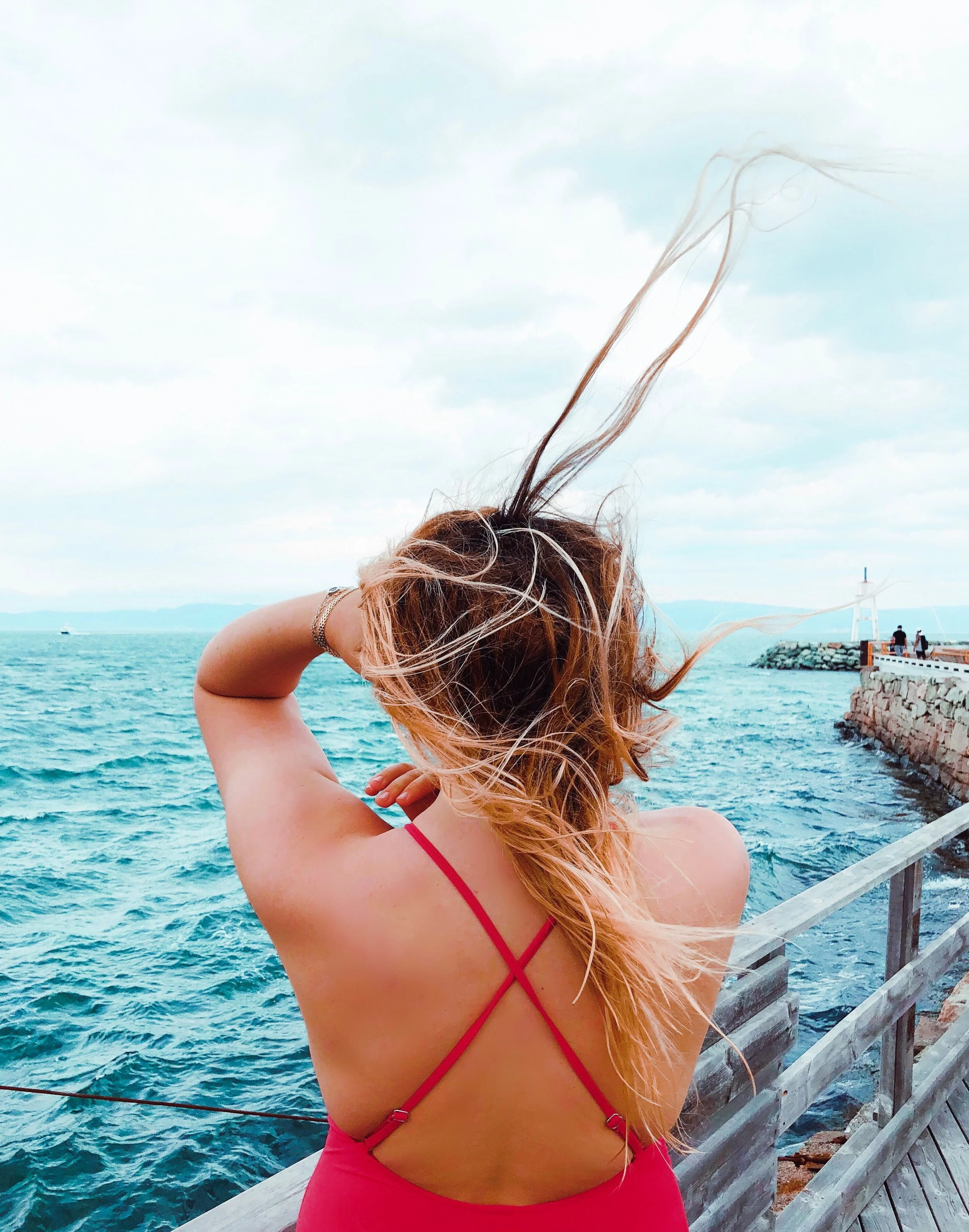
Summer hair… great on the ‘Gram but maybe not so good when you get home again.
There are some things you expect to bring home from holiday.
A tan. A slightly excessive number of photos. Perhaps a new appreciation for sitting outside with a cold Aperol Spritz at 3pm every day.
Dry, brittle hair wasn't necessarily on the list.
Yet August is often when we start seeing the effects of summer on our hair. It can feel rougher than usual, look dull, become harder to style and somehow develop a personality of its own.
Blonde hair may look noticeably lighter… but also more yellow, dry or porous. Brunette hair can lose some of its richness. Coloured hair may seem to fade much faster than usual.
And if you've spent the summer swimming, your hair has probably had a fairly busy few months.
So what's actually going on?
Why does summer affect your hair so much?
Your hair has essentially been exposed to a combination of things that can be challenging for it:
UV exposure. Salt water. Chlorine. Heat. Humidity. Frequent washing. More time in the sun.
None of these things necessarily causes catastrophic damage on its own.
The problem is the cumulative effect.
Your hair's outer layer, the cuticle, acts as a protective barrier. When that barrier becomes roughened or compromised, the hair becomes more porous and less able to retain moisture.
That's when you start noticing the familiar signs:
Hair feeling dry or straw-like
Increased frizz
More tangling
Split ends
Loss of shine
Colour fading
Increased breakage
Hair feeling unusually difficult to style
And there's an important distinction here.
Dry-looking hair and damaged hair aren't necessarily the same thing.
Hair can feel dry because it needs more conditioning. But if the internal structure of the hair has also been weakened through chemical processing, heat or environmental exposure, simply adding more conditioner isn't necessarily going to solve the problem.
That's where professional advice becomes useful.
What does the sun actually do to your hair?
We tend to think about UV protection in terms of our skin, but our hair is exposed too.
UV radiation can contribute to the degradation of the hair's proteins and can also affect colour pigments. Over time, this can leave hair weaker, drier and more faded.
If you colour your hair, you may notice this particularly quickly.
Blonde hair can become more yellow or brassy, while brunette and red tones can lose some of their richness.
And there's another reason your hair might feel particularly dry after a sunny holiday: heat increases water loss from the hair, while repeated exposure can make the cuticle less smooth.
So that beautiful sun-kissed feeling doesn't necessarily mean your hair is enjoying itself as much as you are.
What about salt water?
Sea water contains salt, and salt has a drying effect.
You might love the texture your hair gets after a swim in the sea — that effortless, slightly tousled texture that somehow looks better than anything you can recreate with a styling tool.
But there's a reason it works.
Salt water can draw moisture from the hair, while the combination of salt, sun and wind can leave the cuticle feeling rougher.
That's not to say you need to avoid swimming in the sea.
Please don't sacrifice your holiday for your hair.
Instead, think about what happens afterwards.
Rinse your hair thoroughly with fresh water, use a suitable conditioner and avoid aggressively brushing it while it's wet and tangled.
And then there's chlorine...
Chlorine is particularly relevant if you've spent the summer around swimming pools.
It can strip the hair of some of its natural oils and contribute to dryness. It can also interact with minerals and residues in the hair, which can be particularly noticeable on lighter or blonde hair.
If you've ever left a swimming pool with hair that feels strangely rough, you weren't imagining it.
One of the simplest things you can do is rinse your hair with fresh water before and after swimming.
Hair can absorb water, so saturating it with clean water beforehand means there's less capacity for it to absorb as much chlorinated or salty water.
A leave-in conditioner can also provide another layer of protection.
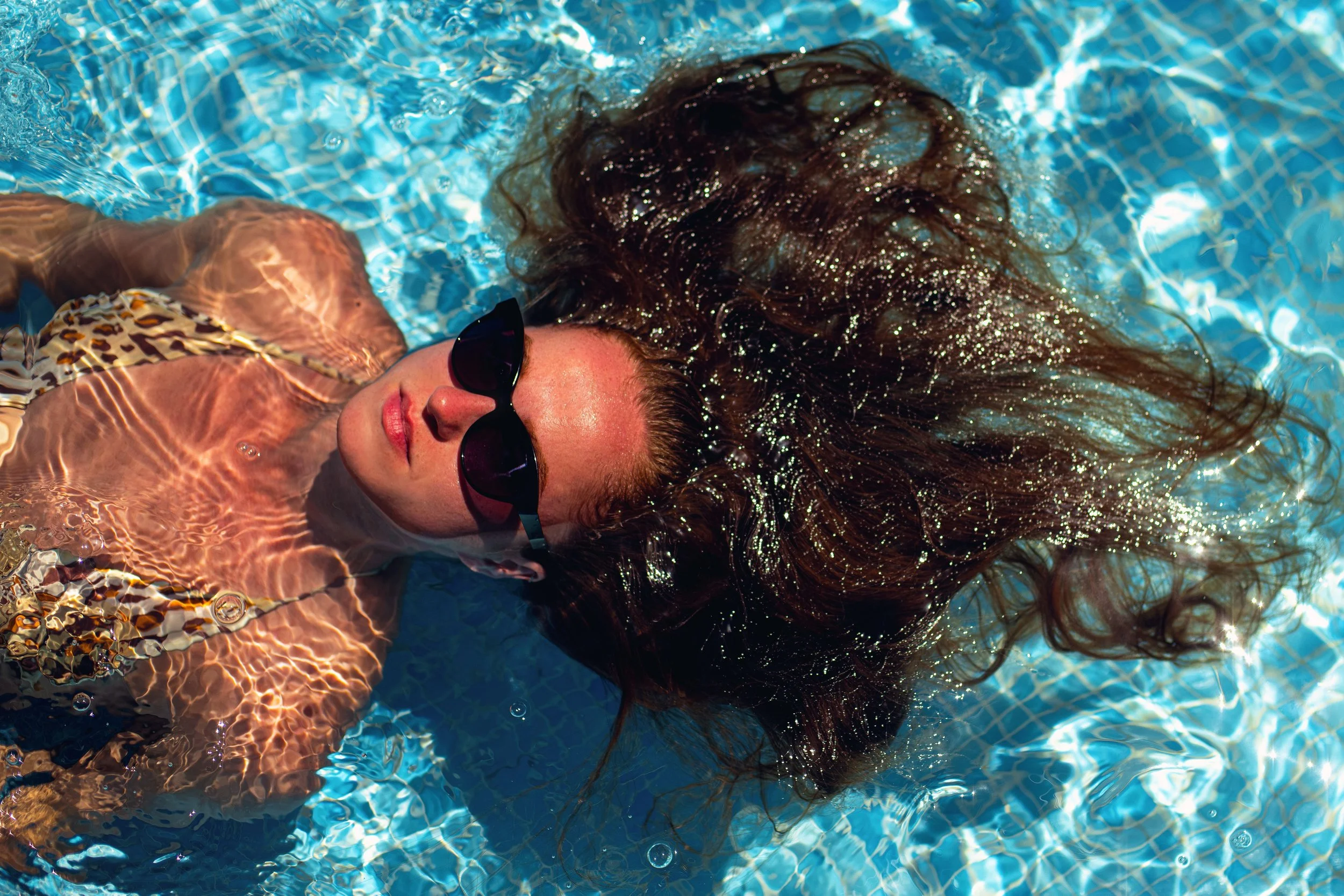
Why your blonde may look completely different after summer
This is one of the most common things we see towards the end of summer.
You might come back from holiday thinking:
"My blonde has gone yellow."
But brassiness isn't always caused by one thing.
Sun exposure, chlorine, minerals in water, fading toner and changes in the underlying pigment can all contribute.
And this is where simply reaching for increasingly purple shampoo isn't always the answer.
Purple shampoo can help neutralise certain yellow tones, but it isn't a substitute for professional colour maintenance.
If your blonde has become dry, porous and unevenly toned, your stylist may recommend something quite different — perhaps a toner or gloss alongside a conditioning treatment.
Sometimes the best way to make blonde hair look better isn't to make it blonder.
It's to make it healthier, shinier and better toned.
So, can summer-damaged hair actually be repaired?
This depends on what we mean by "repair".
Hair is not living tissue, so once a section of hair has physically split or severely broken, there isn't a product that can permanently turn it back into completely undamaged hair.
That's why split ends eventually need cutting.
However, professional treatments can significantly improve the condition, strength, smoothness and appearance of compromised hair.
This is where products such as Olaplex can be particularly useful.
Olaplex is designed to work on the hair's internal structure by helping to reconnect broken disulfide bonds associated with damage. It isn't simply a moisturising mask — it's a different approach to improving the resilience of compromised hair.
For hair that's been coloured, lightened or subjected to a lot of heat and environmental exposure, this can be a valuable part of a treatment programme.
Sometimes your hair needs moisture. Sometimes it needs strength.
This is something that gets lost in a lot of online hair advice.
If your hair feels dry, the instinct is:
"I need moisture."
And perhaps you do.
But if hair has been chemically processed or repeatedly exposed to heat, it may also need strengthening and structural support.
Your stylist can assess how your hair feels and behaves and help determine what it actually needs.
At Raire, we offer professional treatments including Olaplex and Paul Mitchell treatments, alongside our wider range of hair services.
And if your biggest problem is frizz and manageability rather than simply dryness, a Brazilian Blow Dry may be worth discussing.
The right treatment isn't necessarily the most expensive one.
It's the one that addresses the actual problem.
Your post-holiday hair reset
If you've just returned from holiday, you don't necessarily need to cut everything off and start again.
Try this instead.
1. Give your hair a proper cleanse
If you've been swimming regularly, your hair may have accumulated chlorine, minerals, salt and product residue.
A suitable clarifying treatment or shampoo can help remove buildup.
Don't overdo it, though. Aggressive cleansing can make already-dry hair feel even drier.
2. Condition properly
Apply conditioner through the mid-lengths and ends and give it time to work.
If your hair is particularly dry, consider introducing a weekly treatment.
3. Reduce the heat
If your hair has spent weeks in the sun, there's no need to immediately follow that with daily straighteners or a high-temperature curling wand.
Give it a little breathing room.
4. Don't ignore your ends
If the ends are splitting or breaking, a trim can make a surprisingly significant difference to how the whole head of hair looks and feels.
5. Reassess your colour
If your colour has faded or become brassy, don't automatically reach for a home dye.
Book a consultation.
Your stylist can assess what has happened and work out whether you need a toner, gloss, colour refresh, highlights or something else entirely.
The good news?
Your hair doesn't need to emerge from summer looking perfect.
Hair changes with the seasons, your lifestyle and the things you expose it to.
September is actually a great time to reset.
Think of it as a little back-to-school feeling for your hair.
A trim.
A treatment.
A colour refresh.
A better home-care routine.
And perhaps a reminder that healthy hair isn't about never colouring it, never using heat or never going swimming.
It's about understanding what your hair needs — and looking after it accordingly.
Ready for your post-summer hair reset?
Our teams at Raire Hairdressing Company in Wick, Littlehampton and Rustington can help assess the condition of your hair and recommend the right cut, colour or treatment for you.
Book your appointment online or speak to your nearest salon.